"Nioh 3" interview. "Sengoku Death Game" has finally changed to an open field. It is an action that switches between samurai and ninja, and yokai techniques appear in different forms. The hellish Warring States Period begins
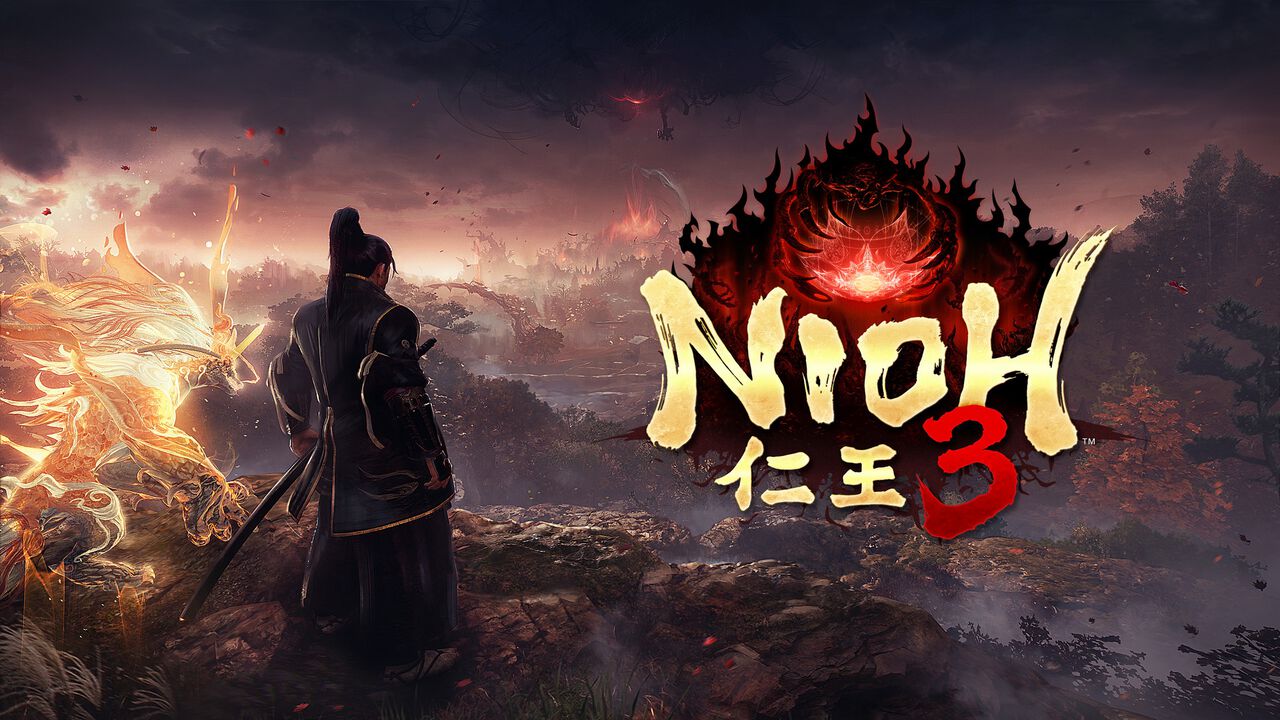
Koei Tecmo Games' dark Sengoku action RPG "Nioh 3" was announced on June 5, 2025. It will be compatible with PlayStation 5 (PS5) and PC (Steam), and is scheduled to be released in early 2026. It will be developed by Koei Tecmo Games' Team NINJA.
This is the sequel to "Nioh 2," which was released on March 12, 2020, and is the latest title in about five years. In addition to the gritty difficulty level of the game labeled "Sengoku Death Game", it is a popular series that has sold more than 8 million copies in total, acclaiming the game's detailed equipment collection elements, hack and slash elements through training, and the freedom of battles with a wide variety of actions and various strategies.
In this article, we interviewed Fumihiko Yasuda, general producer of "Nioh 3", and Gohei Shibata, producer. We asked him in detail about what kind of work "Nioh 3" is about. Also, before the interview, I had the opportunity to try out the demo version for about an hour on PS5, which will be available for a limited time until June 18, 2025. Let's first tell you about the new system that will be the key to this game that we found out after playing the game.
This is the sequel to "Nioh 2," which was released on March 12, 2020, and is the latest title in about five years. In addition to the gritty difficulty level of the game labeled "Sengoku Death Game", it is a popular series that has sold more than 8 million copies in total, acclaiming the game's detailed equipment collection elements, hack and slash elements through training, and the freedom of battles with a wide variety of actions and various strategies.
In this article, we interviewed Fumihiko Yasuda, general producer of "Nioh 3", and Gohei Shibata, producer. We asked him in detail about what kind of work "Nioh 3" is about. Also, before the interview, I had the opportunity to try out the demo version for about an hour on PS5, which will be available for a limited time until June 18, 2025. Let's first tell you about the new system that will be the key to this game that we found out after playing the game.
"Nioh" goes to the open field
![[IMAGE]](https://cimg.kgl-systems.io/camion/files/famitsu/43136/a91cb2b73191d375655a1b91bf93d1b47.jpg?x=767)
The first thing that changed after trying out the demo version was that the game is now an open field. It doesn't seem to be as big as a "Rise of the Ronin" class open world, but the stage is an open field that can be explored freely, and the game system is not the traditional stage traversal type, but a game system that allows you to freely conquer the map.
While expanding the exploration elements, the game also has a solid battle with enemies on the road and base, and the gameplay is like conquering the gritty battles typical of "Nioh" with your own unique approach. By the way, you can jump from this work, and you can climb cliffs. It's not a level of freedom where you can climb anything, so this area was similar to Wo Long: Fallen Dynasty.
There is a space called "Hell" on the field, which is like "Everlasting" in the previous game, and this is the target of the map. By exorcising hell and clearing the deepest part of the map, which is the final goal, it seems that the route to the next map will expand. Although there is a goal point called Hell, the game system is left to the player to take the route to get there.
Another major change is the difference in battle styles. Of course, the samurai-like swordplay action that continues from the first "Nioh" and makes full use of swords and spears is alive and well. From "Nioh 2", there were elements such as "yokai techniques" and "yokai transformation" that made full use of the power of yokai, but this is a system unique to "Nioh 2", and it will appear in a different form in this work. The upper, middle, and lower stances for each weapon are also alive and well.
In Nioh 3, the fighting style was divided into two types: "samurai style" and "ninja style". You can switch at any time during the battle, and you can fight while completely changing the battle system.
The samurai style is "Nioh" so far In the same style as the series, you can fight by making full use of "Zanshin", which restores energy (so-called stamina). As a new element, "technique sharpening" was added, which could be used to strengthen martial arts, and when the opportunity arose, it became more powerful and flashy. In addition, the weapons that can be used for each style are different, such as swords and spears are only for samurai, and chain sickles are for ninjas.
The ninja style is designed so that the main character can move lightly and quickly. Ninja-like weapons such as the "Chain Scythe" that have existed so far seem to be only available in the Ninja style. Although the power of one shot is low, the number of moves is excellent overall, and in addition, there is no energy management by "Zanshin", but a unique movement technique called "Kasumi" can be used. He was able to use his own remnants as decoys and move around behind his enemies.
In addition, the basic method of "ninjutsu" up to now has been to equip what you have learned, and when you use it up, you can replenish it at the company (checkpoint that serves as a base). In this game, ninjutsu is only available in the Ninja style.
There is a limit to the number of times you can activate ninjutsu, but the system restores the number of times you can hit it, so you can use a lot of ninjutsu while attacking. By the way, it was also replenished with samurai-style attacks.
In addition, the action of changing styles is also a defensive action. When you press a button, you can change your outfit instantly on the spot, like a quick change of clothes, but at that time, you can play off the dangerous attack "big move" that glows red, and you can break the enemy's posture. It's similar to the "feat" of "Nioh 2" (the action of turning into a yokai and countering) or the "kaku" of "Wo Long: Fallen Dynasty".
The equipment set is divided into samurai style and ninja style, and the equipment is changed in an instant when you change the style. The armor that can be equipped is different between the two styles, so the width of the equipment is also doubled. If you play deeply, you can play as if you are using two different builds at the same time.
While expanding the exploration elements, the game also has a solid battle with enemies on the road and base, and the gameplay is like conquering the gritty battles typical of "Nioh" with your own unique approach. By the way, you can jump from this work, and you can climb cliffs. It's not a level of freedom where you can climb anything, so this area was similar to Wo Long: Fallen Dynasty.
There is a space called "Hell" on the field, which is like "Everlasting" in the previous game, and this is the target of the map. By exorcising hell and clearing the deepest part of the map, which is the final goal, it seems that the route to the next map will expand. Although there is a goal point called Hell, the game system is left to the player to take the route to get there.
Another major change is the difference in battle styles. Of course, the samurai-like swordplay action that continues from the first "Nioh" and makes full use of swords and spears is alive and well. From "Nioh 2", there were elements such as "yokai techniques" and "yokai transformation" that made full use of the power of yokai, but this is a system unique to "Nioh 2", and it will appear in a different form in this work. The upper, middle, and lower stances for each weapon are also alive and well.
In Nioh 3, the fighting style was divided into two types: "samurai style" and "ninja style". You can switch at any time during the battle, and you can fight while completely changing the battle system.
The samurai style is "Nioh" so far In the same style as the series, you can fight by making full use of "Zanshin", which restores energy (so-called stamina). As a new element, "technique sharpening" was added, which could be used to strengthen martial arts, and when the opportunity arose, it became more powerful and flashy. In addition, the weapons that can be used for each style are different, such as swords and spears are only for samurai, and chain sickles are for ninjas.
The ninja style is designed so that the main character can move lightly and quickly. Ninja-like weapons such as the "Chain Scythe" that have existed so far seem to be only available in the Ninja style. Although the power of one shot is low, the number of moves is excellent overall, and in addition, there is no energy management by "Zanshin", but a unique movement technique called "Kasumi" can be used. He was able to use his own remnants as decoys and move around behind his enemies.
In addition, the basic method of "ninjutsu" up to now has been to equip what you have learned, and when you use it up, you can replenish it at the company (checkpoint that serves as a base). In this game, ninjutsu is only available in the Ninja style.
There is a limit to the number of times you can activate ninjutsu, but the system restores the number of times you can hit it, so you can use a lot of ninjutsu while attacking. By the way, it was also replenished with samurai-style attacks.
In addition, the action of changing styles is also a defensive action. When you press a button, you can change your outfit instantly on the spot, like a quick change of clothes, but at that time, you can play off the dangerous attack "big move" that glows red, and you can break the enemy's posture. It's similar to the "feat" of "Nioh 2" (the action of turning into a yokai and countering) or the "kaku" of "Wo Long: Fallen Dynasty".
The equipment set is divided into samurai style and ninja style, and the equipment is changed in an instant when you change the style. The armor that can be equipped is different between the two styles, so the width of the equipment is also doubled. If you play deeply, you can play as if you are using two different builds at the same time.
"Nioh 3" Interview
Based on these experiences, we interviewed Mr. Yasuda and Mr. Shibata. We asked him about his questions about the system and how Nioh 3 came to be made.
![[IMAGE]](https://cimg.kgl-systems.io/camion/files/famitsu/43136/aa01165848fbc3c910abb3e9f439c3dee.jpg?x=767)
Fumihiko Yasuda
General producer of "Nioh 3". He was the director of "Nioh" and the producer and director of "Nioh 2". Head of Team NINJA brand.
Kohei Shibata
Producer of "Nioh 3". For "Nioh" and "Nioh 2", he served as a project manager.
A new challenge for "Nioh"
![[IMAGE]](https://cimg.kgl-systems.io/camion/files/famitsu/43136/a044ed10486dfdef4996be8c0ae7cc086.jpg?x=767)
――This time, Mr. Yasuda is the general producer and Mr. Shibata is the producer, so what kind of staff structure did you use for development?
Yasuda
: The director has been involved in the Nioh series since the beginning, and the technical director and other key development staff are also in the company. However, the number of young staff members in the team is increasing, and we are rejuvenating. The "Nioh" series began in 2017, and "Nioh 2" was released in 2020, so many of our staff members have played the series when they were students.
While I feel that a lot of time has passed since the release of "Nioh," it is a great strength to have fans of the series join the development staff, and I feel that the existing members are also reassuring and highly motivated.
――After the release of Nioh 2, we interviewed Mr. Yasuda in the Weekly Famitsu magazine released on June 4, 2020, including a player survey. At that time, Mr. Yasuda had already replied, "If there is a Nioh 3, it will be an open world." Did you already have a vision at that time?
While I feel that a lot of time has passed since the release of "Nioh," it is a great strength to have fans of the series join the development staff, and I feel that the existing members are also reassuring and highly motivated.
――After the release of Nioh 2, we interviewed Mr. Yasuda in the Weekly Famitsu magazine released on June 4, 2020, including a player survey. At that time, Mr. Yasuda had already replied, "If there is a Nioh 3, it will be an open world." Did you already have a vision at that time?
Yasuda:
At that time, "Rise of the Ronin" and other titles were already working behind the scenes, so I may have answered that. In addition, we were originally looking for a way to create a form other than making Nioh 2 and conquering the linear stages, but at the time, it was difficult to come up with an answer in terms of game design.
This time, I decided to take another look at it and use my experience working on Rise of the Ronin to take on the open field. Many of the staff members who produced "Rise of the Ronin" are also involved in this work.
This time, I decided to take another look at it and use my experience working on Rise of the Ronin to take on the open field. Many of the staff members who produced "Rise of the Ronin" are also involved in this work.
Shibata
When we decided to take on the challenge of the open field this time, the concept of the entire game was solidified, such as changing the style of Samurai and Ninja. It actually started working around the end of 2021 ~ 2022. It was around the time that all the downloadable content for "Nioh 2" was finished.
――At the time of the 4th anniversary of "Nioh" in February 2021, you said, "I will take on a new project away from the samurai and yokai of the Sengoku period." Having said that, you actually started working on Nioh 3 quite early on.
――At the time of the 4th anniversary of "Nioh" in February 2021, you said, "I will take on a new project away from the samurai and yokai of the Sengoku period." Having said that, you actually started working on Nioh 3 quite early on.
Yasuda:
I worked on "Nioh" and "Nioh 2" as a director for nearly 10 years. I thought I had done a good job of both the story and the game, so I personally thought I had reached a break. However, many members of the "Nioh" team, led by Shibata, said, "I want to make 'Nioh 3'!" From there, the concept became clear, so we decided to give it a try.
――And in between, there was "Wo Long: Fallen Dynasty" from "Dark Three Kingdoms Death Game" and "Rise of the Ronin" from "Bakumatsu Open World". For a title these days, I feel that the development speed is very fast. In the past, Mr. Yasuda told me that he would like to release at least one major title a year.
――And in between, there was "Wo Long: Fallen Dynasty" from "Dark Three Kingdoms Death Game" and "Rise of the Ronin" from "Bakumatsu Open World". For a title these days, I feel that the development speed is very fast. In the past, Mr. Yasuda told me that he would like to release at least one major title a year.
Yasuda
As I mentioned earlier, we are hiring a large number of young staff due to company policy, and the number of staff itself is increasing every year. In addition, we have been able to distribute the allocation of key staff well, and I think that we are becoming a system that can be entrusted to them. As a result, we were able to increase the number of titles produced within Team NINJA.
We have asked PlatinumGames to produce NINJA GAIDEN 4, and we plan to deliver at least one major title every year in the future. For TeamNINJA, 2026 will be Nioh 3.
We have asked PlatinumGames to produce NINJA GAIDEN 4, and we plan to deliver at least one major title every year in the future. For TeamNINJA, 2026 will be Nioh 3.
The open field unique to "Nioh"
――In fact, this work became an open field title. I don't think it's as open a "world" as Rise of the Ronin, so why did you choose an open field?
Yasuda:
The Nioh series is a title with a high degree of freedom in strategy, but that was in terms of the range of action, and there was not that much freedom in terms of stage and level design. Based on the know-how we have cultivated in "Rise of the Ronin," we wanted to create a high-density action experience and a wide range of strategies that are unique to the open field. For example, if you can't beat a boss, you can explore other locations or capture other bosses.
However, at first, it was difficult to design the field. It could be too broad, or it could be too narrow and look no different from the previous Nioh series. The level design team made many adjustments to the salt plum and finally settled on a good drop.
――How do you differentiate yourself from Rise of the Ronin?
However, at first, it was difficult to design the field. It could be too broad, or it could be too narrow and look no different from the previous Nioh series. The level design team made many adjustments to the salt plum and finally settled on a good drop.
――How do you differentiate yourself from Rise of the Ronin?
Yasuda:
I think it's a distinctly different experience. The theme of "Rise of the Ronin" is to live in the world of the end of the Edo period, so the main focus of the production was to recreate the field of the end of the Edo period. "Nioh 3" does not change the theme of the series, which is a game of "Sengoku Death," so the main focus is on the experience of challenging and facing difficulties over and over again, and the sense of accomplishment that you can feel when you overcome them. While incorporating it into the form of an open field, we increased the degree of freedom.
Of course, there is also the advantage of the stage system that proceeds to the conventional linear of the series. This time, the open field created a great value for each player's experience, as they would encounter difficulties seamlessly. I think you will feel a different charm than before.
Of course, there is also the advantage of the stage system that proceeds to the conventional linear of the series. This time, the open field created a great value for each player's experience, as they would encounter difficulties seamlessly. I think you will feel a different charm than before.
Shibata
Until now, it was a mission-based game, so there were high-density battles prepared for each stage, and it was fun to capture. The goal was to make use of it in the open field, so I was careful not to rely only on the size of the field. While ensuring the fun of the past, it also expands the freedom to explore the field.
――Certainly, rather than surviving the beautiful world of the end of the Edo period in an open world, fighting humans and yokai in the bloody and devastated Sengoku period is what Nioh is most like.
――Certainly, rather than surviving the beautiful world of the end of the Edo period in an open world, fighting humans and yokai in the bloody and devastated Sengoku period is what Nioh is most like.
Yasuda:
The graphics team was very conscious of the fact that it has a Japanese-style world view and a dark Sengoku fantasy so that people can feel it even if it is an open field.
――I see. Also, as you can guess from the movie, this work is set in the Warring States period. In a previous interview, he said, "If there is a 'Nioh 3,' it will be overseas because the Sengoku period has been depicted, for example, the Three Kingdoms."
――I see. Also, as you can guess from the movie, this work is set in the Warring States period. In a previous interview, he said, "If there is a 'Nioh 3,' it will be overseas because the Sengoku period has been depicted, for example, the Three Kingdoms."
Yasuda:
I'm sure by that time, the project for "Wo Long: Fallen Dynasty" was already in motion (laughs).
――That's right (laughs). It seems that there are characters that you have seen somewhere, but will the worldview be the same in the Sengoku period?
――That's right (laughs). It seems that there are characters that you have seen somewhere, but will the worldview be the same in the Sengoku period?
Shibata
First of all, we decided from the beginning that the stage would be set in the Sengoku period. After all, I think that fans of the "Nioh" series have come to like the dark world view of the Sengoku period as a "Sengoku Death Game". If you suddenly start with a different worldview, you may think, "Is this really 'Nioh'?"
You may have doubts about that part because it depicts the same Sengoku period as the previous series, but as the story progresses, the scenery changes again, and I think you can understand that this is why it is set in the Sengoku period.
You may have doubts about that part because it depicts the same Sengoku period as the previous series, but as the story progresses, the scenery changes again, and I think you can understand that this is why it is set in the Sengoku period.
![[IMAGE]](https://cimg.kgl-systems.io/camion/files/famitsu/43136/abfb9da3a894453c488232e979d6932a2.jpg?x=767)
――In terms of the story, there was William's activities in Nioh, and there was Shu's story in Nioh 2, so is the worldview a continuation from there?
Yasuda
: Well, it's difficult to answer, but you can say that it's a continuation of the earth, and it can be said that it's not. However, in terms of the time period, it is set in almost the same era as Nioh 2, and it is depicted from a different perspective. For example, in the demo version, the game is set around the time of the Battle of Mikatagahara. If so, Tokugawa Ieyasu and Takeda Shingen will also appear.
There are some characters that those who have played the series will think "wow", but even those who have not played "Nioh" before can enjoy the title from the beginning, so if you are looking forward to the story, please pay attention to it.
――The main character is named Takechiyo Tokugawa, isn't it? The main character is a character creation style just like in Nioh 2, but what kind of protagonist is he?
There are some characters that those who have played the series will think "wow", but even those who have not played "Nioh" before can enjoy the title from the beginning, so if you are looking forward to the story, please pay attention to it.
――The main character is named Takechiyo Tokugawa, isn't it? The main character is a character creation style just like in Nioh 2, but what kind of protagonist is he?
Yasuda
"Nioh 2"Similar to Hidechiyo, he is a protagonist whose real name is unknown, but who seems to be connected to a larger historical trend. If you are familiar with history and have a good sense, you may be able to understand it immediately. It is not depicted much in the scope of the demo version, but the part full of historical romance is important this time as well.
――I'm looking forward to it! The "Nioh" series has a mascot-like yokai. Wood spirits, lure charms, shin rubs, etc. There is also a mascot-like yokai "Senko" from this work, and did you want to increase it?
――I'm looking forward to it! The "Nioh" series has a mascot-like yokai. Wood spirits, lure charms, shin rubs, etc. There is also a mascot-like yokai "Senko" from this work, and did you want to increase it?
Shibata
I wanted to link each of them to exploration, so yokai such as tree spirits and shin rubbing are also an activity element. In Senko, when you hear the sound of a bell, you can look up at the sky and it will float in the air, so you can get a reward by shooting it.
――It's not a bad monster, but I wondered if it was okay to shoot it with a bow and arrow (laughs).
――It's not a bad monster, but I wondered if it was okay to shoot it with a bow and arrow (laughs).
Shibata
For the time being, it is set up to be played as a yokai (laughs). It's an exploration element, but it's also a great way to practice ranged weapons.
Samurai × Ninja Double Style
![[IMAGE]](https://cimg.kgl-systems.io/camion/files/famitsu/43136/a50a15c18af87b179faedb6b212fa766a.jpg?x=767)
――The big difference in the battle is the change between the samurai style and the ninja style. How did you come up with the idea?
Shibata:
What I couldn't do in "Nioh" in "Nioh 2"Yasuda worked on it, and it was finished with a very complete system. As a result, it was difficult to expand the action further because it would be complicated. When I thought about what to do, I decided to make a big difference in the feel of the action and the way it looks when you operate it.
However, it's different to lose the action that is typical of "Nioh" so far, or to become something else. Up until now, we had built the system in such a way that both samurai and ninja were included in the player character, so we searched for a way to combine them and fight while making them independent, which led to the current style change mechanism.
However, it's different to lose the action that is typical of "Nioh" so far, or to become something else. Up until now, we had built the system in such a way that both samurai and ninja were included in the player character, so we searched for a way to combine them and fight while making them independent, which led to the current style change mechanism.
Yasuda:
Until now, the main characters have changed their stance as samurai due to the difference in light ~ heavy armor and the difference in stance. If I wanted to, I could have fought like a ninja with a quick body. This time, we have a clearer and more ninja-like gameplay.
In terms of the game experience, there are some similarities to conventional stances, and in the past, I was able to clear the game even if I played with only one stance, such as "I only use the upper stance". It's just one of the range of actions, so you can change your style by looking at your opponent, or you can clear it without changing it. This is a trial version, and we are particularly concerned about the reaction.
――You can play with a particular style, such as "I'm going to go with one samurai" or "I'm going to live as a ninja," or you can switch between them and move around flexibly.
In terms of the game experience, there are some similarities to conventional stances, and in the past, I was able to clear the game even if I played with only one stance, such as "I only use the upper stance". It's just one of the range of actions, so you can change your style by looking at your opponent, or you can clear it without changing it. This is a trial version, and we are particularly concerned about the reaction.
――You can play with a particular style, such as "I'm going to go with one samurai" or "I'm going to live as a ninja," or you can switch between them and move around flexibly.
Yasuda:
That's right. We continue to use the character creation system, so please play as you are.
Shibata
For those people, some of the skills are like making use of only one style.
――Is there a reason why Chiyo Takechiyo is both a samurai and a ninja?
――Is there a reason why Chiyo Takechiyo is both a samurai and a ninja?
Shibata
: Yes, I incorporate that into the story as well.
Yasuda:
I don't think many people expect a story from the title of Team NINJA (laughs). However, I think that Nioh 2 did a good job of depicting the connection between history and fantasy, and some people have said that they like the worldview of Nioh that includes Western elements. Also, after "Rise of the Ronin" and others, more and more people enjoy the story as much as the action, so I think they will enjoy that as well. That said, the game is fundamentally focused on being an action RPG.
――I felt that you were able to mix well with what was well received in the form of a culmination of the action that Team NINJA has created, such as the playing performance when changing styles.
――I felt that you were able to mix well with what was well received in the form of a culmination of the action that Team NINJA has created, such as the playing performance when changing styles.
Yasuda:
When creating action battles, it's easy to accentuate parry-type actions. The special skill of "Nioh 2" is also a counter-type action, which is a different form, but it is also incorporated this time. For all of these titles, we have had a hard time with how the system works and how to present it, so we exchange opinions within Team NINJA about what was well received and what was insufficient. Therefore, I think that "Nioh 3" also contains the essence of the past.
――In an unprecedented way, ninja-style ninjutsu can now be replenished through battles, and it can be used in large quantities. Did you choose this because of the balance between the open field experience and the open field experience?
――In an unprecedented way, ninja-style ninjutsu can now be replenished through battles, and it can be used in large quantities. Did you choose this because of the balance between the open field experience and the open field experience?
Shibata
It's more of a battle experience. The first thing about ninja style was to be able to move quickly, but I also thought that being able to use ninjutsu was what made it unique. If you can fight with high mobility, but if you run out of ninjutsu, you have to go back to the company to replenish it, and the tempo of the battle is poor.
Even if you like ninjas, if you run out of ninjutsu, you have to fight samurai style and stay samurai until you return to the company, which also limits your freedom of choice. That's why I make it an action that allows me to replenish my ninjutsu while fighting.
Even if you like ninjas, if you run out of ninjutsu, you have to fight samurai style and stay samurai until you return to the company, which also limits your freedom of choice. That's why I make it an action that allows me to replenish my ninjutsu while fighting.
![[IMAGE]](https://cimg.kgl-systems.io/camion/files/famitsu/43136/ac3cbc4909f6dcf76b0bdf71efc661a6d.jpg?x=767)
――As far as I've played, ninjutsu has mainly been projectiles such as shurikens, but do you have an installation system or activation system like in the past?
Shibata
: Yes, there is. I would like you to think that there are almost all kinds of ninjutsu systems such as installation systems and elemental attack systems that have existed in the past.
――Personally, I have the impression that the Nioh series is extremely strong in ninjutsu, but what about ninja-style ninjutsu?
――Personally, I have the impression that the Nioh series is extremely strong in ninjutsu, but what about ninja-style ninjutsu?
Yasuda:
It was amazing when you did the first "Nioh" (laughs). Nioh 2 ...... the poison is rampant. As a result, I made a lot of adjustments to the balance. I think it can be established and spread as one of the strategies, but basically I don't want to make adjustments that weaken it too much. We are still working on it, but we want to allow what is acceptable as a range of strategies.
――Ninjutsu skills have become independent as a style, but do you have yin-yang skills?
――Ninjutsu skills have become independent as a style, but do you have yin-yang skills?
Shibata:
Yes. The Yin-Yang skill can be used in either style, and is a traditional form of using cards as items. Also, in Nioh 2, if you got the "Soul Fee", you could use the Yokai technique. The system there is now a yin-yang skill.
Therefore, if you pick up the soul fee that was dropped when you defeat an enemy, it will become a Yin-Yang skill tag and you will be able to use the Yin-Yang skill. Also, if you pick up a special soul fee that drops when you defeat some powerful enemies, that yokai will become a card. When you use it, it will summon the yokai and bring out the attacks that you are good at. In other words, there is a yin-yang skill that is like an alternative to the yokai technique.
――Is that the result of following the yokai technique system that was popular in Nioh 2 and incorporating it into a form unique to this game?
Therefore, if you pick up the soul fee that was dropped when you defeat an enemy, it will become a Yin-Yang skill tag and you will be able to use the Yin-Yang skill. Also, if you pick up a special soul fee that drops when you defeat some powerful enemies, that yokai will become a card. When you use it, it will summon the yokai and bring out the attacks that you are good at. In other words, there is a yin-yang skill that is like an alternative to the yokai technique.
――Is that the result of following the yokai technique system that was popular in Nioh 2 and incorporating it into a form unique to this game?
Shibata
"Nioh", "Nioh 2"I didn't want to delete the system that was popular in this game, and the hack and slash nature that I want to take a lot of care of in this game. One of the attractions was the game of collecting soul fees, so it was intertwined with the Yin-Yang skill to match this work.
――I see. The samurai style is basically the same, but there are skills such as "Grinding", which is just guard, and "Giken", which allows you to perform martial arts continuously. Did you incorporate this with the intention of strengthening the samurai part as well?
――I see. The samurai style is basically the same, but there are skills such as "Grinding", which is just guard, and "Giken", which allows you to perform martial arts continuously. Did you incorporate this with the intention of strengthening the samurai part as well?
Shibata:
Before we released the trial version, we did a lot of testing within the company. In the beginning, there were a lot of opinions that the ninja style was too strong, so when the samurai style was enhanced, one of them was often extremely strong because the samurai style was too strong (laughs).
Of course, we have made adjustments, but if we simply end up with a samurai style with a strong stance, there will be no change from the previous works in the series, and it will lose its freshness. In order to have more characteristics unique to samurai, we incorporated "technique sharpening" that can create powerful martial arts featuring martial arts.
――Also, the weapon types that can be used in Samurai style and Ninja style are different. Do you imagine that the weapon types that appeared in "Nioh 2" have appeared, but also incorporate new weapons?
Of course, we have made adjustments, but if we simply end up with a samurai style with a strong stance, there will be no change from the previous works in the series, and it will lose its freshness. In order to have more characteristics unique to samurai, we incorporated "technique sharpening" that can create powerful martial arts featuring martial arts.
――Also, the weapon types that can be used in Samurai style and Ninja style are different. Do you imagine that the weapon types that appeared in "Nioh 2" have appeared, but also incorporate new weapons?
Shibata:
I can't talk about the details of the weapon types yet, but the main characters so far have also used ninja-like weapons as samurai. This time, I decided to have the samurai and ninja have separate weapons.
Yasuda
: Well, most of the weapon types are reused from the "NINJA GAIDEN" series.
Shibata:
Hey! It's a new technique and movement, and let's at least say that it's the experience I've accumulated (laughs).
――(laughs) I felt that "Hell" was similar to "Everlasting" in "Nioh 2", is that your image?
――(laughs) I felt that "Hell" was similar to "Everlasting" in "Nioh 2", is that your image?
Shibata:
Yes. I thought about evolving the darkness as well, but it would be uninteresting to adopt it as it is. As a Japanese dark fantasy, when we wanted to have the unique characteristics of Nioh 3, we decided to release "Hell".
If I were to think about what would be the most horrible place in "Wa", I would think of hell. Therefore, I thought that if a part of Hell appeared on the field and the result was a world where yokai were mixed, it would be a Japanese-style dark fantasy and an element unique to Nioh 3.
――What kind of strategy elements does "Hell" have?
If I were to think about what would be the most horrible place in "Wa", I would think of hell. Therefore, I thought that if a part of Hell appeared on the field and the result was a world where yokai were mixed, it would be a Japanese-style dark fantasy and an element unique to Nioh 3.
――What kind of strategy elements does "Hell" have?
Shibata
One of the main protagonist's main goals is to exorcise hell. If there is hell, you will not be able to go beyond the field. It is the key to conquering the open field. You have the freedom to go straight to Hell, but you can also explore the field, fight, strengthen your main character, and then conquer Hell.
There are enemies on the field, so you can earn experience points to increase your stats and collect equipment. In addition to leveling up, you can also upgrade your game to change the way you fight, for example, as I mentioned earlier, you can collect soul fees and use them for yin-yang skills. In addition, as you conquer the field, you can acquire new ninjutsu and learn special skills.
――While there is a degree of freedom in the order of attack, there is also a degree of freedom in building, just like the Nioh series.
There are enemies on the field, so you can earn experience points to increase your stats and collect equipment. In addition to leveling up, you can also upgrade your game to change the way you fight, for example, as I mentioned earlier, you can collect soul fees and use them for yin-yang skills. In addition, as you conquer the field, you can acquire new ninjutsu and learn special skills.
――While there is a degree of freedom in the order of attack, there is also a degree of freedom in building, just like the Nioh series.
Shibata
: This time, you can use two different types of builds, Samurai and Ninja. For example, samurai should be heavily armed, and ninjas should be lightly armed. Even in the trial version, you can make a difference to some extent, and specialIt is also possible to build a build, so I would be grateful if you could give me your opinion on the width of that area.
――As usual, the equipment was lined with detailed special effects. In addition, as a new element of the game, there was an "ability replacement" system that allows you to acquire new abilities through exploration and replace them as passive skills in the company. I was wondering if I could give him an easy-to-understand ability, but from the first move, he developed a very maniacal ability (laughs). From the very beginning, I felt the message that this is a game where you can enjoy detailed builds.
――As usual, the equipment was lined with detailed special effects. In addition, as a new element of the game, there was an "ability replacement" system that allows you to acquire new abilities through exploration and replace them as passive skills in the company. I was wondering if I could give him an easy-to-understand ability, but from the first move, he developed a very maniacal ability (laughs). From the very beginning, I felt the message that this is a game where you can enjoy detailed builds.
Shibata:
One of the best parts of the Nioh series is assembling the build. It's something you can get, and martial arts and ninjutsu are very easy to understand. With that in mind, we also wanted you to enjoy the deeper parts, so we prepared both casual and core parts that you can get by exploring.
However, I thought that "switching abilities" was too deep from the beginning (laughs). At first, I was very hesitant about whether it would be better to provide more easy-to-understand abilities, but I thought that if we showed the depth from the beginning, people would understand how much we will be able to play in the future. In addition, you can capture the game without worrying about the details in the early stages.
However, I thought that "switching abilities" was too deep from the beginning (laughs). At first, I was very hesitant about whether it would be better to provide more easy-to-understand abilities, but I thought that if we showed the depth from the beginning, people would understand how much we will be able to play in the future. In addition, you can capture the game without worrying about the details in the early stages.
Yasuda:
We thought about delivering it in a simple direction, but the real pleasure of the "Nioh" series is that you can enjoy detailed builds. Nioh 3 in particular offers a variety of approaches, such as exploring other fields to strengthen or finding different equipment if you get stuck. We try to make it so that you don't have to master everything, and even if there is a deep and complex system in it, I don't think it's a bad thing. That's part of what we want players to enjoy through trial and error. No matter what I do, I'm going to die anyway (laughs).
――After all, you still have a strong bone (laughs).
――After all, you still have a strong bone (laughs).
Yasuda
Of course, I don't want to clear it easily (laughs). That said, we don't want to unreasonably kill our players. One of the attractions is that you learn various tactics through stages, and I think that trial and error is the real thrill. Therefore, I think that something simple and simple would not be suitable for this work.
In addition, the system is also released in stages. There are many systems that have been followed in the series, so even if you can use them all at once, you won't know what to use. Of course, players with high action skills can clear the game just by swinging the sword, but if it is difficult to capture, it is designed so that you can learn various approaches.
In addition, the system is also released in stages. There are many systems that have been followed in the series, so even if you can use them all at once, you won't know what to use. Of course, players with high action skills can clear the game just by swinging the sword, but if it is difficult to capture, it is designed so that you can learn various approaches.
![[IMAGE]](https://cimg.kgl-systems.io/camion/files/famitsu/43136/a316f4c57a6a940be2c10d76ddf21f52f.jpg?x=767)
Shibata
: For example, this time, you can't use the stance change for each weapon from the beginning. However, if you want to do it, you can use it immediately from the beginning, but it is one of the skill releases. The stance is one of the features of the Nioh series, but this time there is a new element called ninja style.
If you're used to it, you won't be too bothered, but for first-time players, it's like having two weapons and two stances at some point in the samurai style and ninja style. So, if you suddenly use a samurai style stance, the range of actions will be too much and you will be confused.
――Also, you can use "Ninety-nine Incarnations" as one of your trump cards, but in "Nioh 2", "Yokai Transformation" is the corresponding system, so I thought that we were back to the first generation, but there were also changes in appearance like in "Nioh 2".
If you're used to it, you won't be too bothered, but for first-time players, it's like having two weapons and two stances at some point in the samurai style and ninja style. So, if you suddenly use a samurai style stance, the range of actions will be too much and you will be confused.
――Also, you can use "Ninety-nine Incarnations" as one of your trump cards, but in "Nioh 2", "Yokai Transformation" is the corresponding system, so I thought that we were back to the first generation, but there were also changes in appearance like in "Nioh 2".
Shibata
: "Nioh 2" was a yokai because it was a half-demon protagonist, but the main character of "Nioh 3" is not. In "Nioh", William used his guardian spirit as a weapon and fought as a ninety-nine weapon. "Nioh 3" follows this pattern, but gives it a unique form to this game.
The protagonist of Nioh 3 has a talent for drawing out more of the power of his guardian spirits, so he looks like he is half-merged with his guardian spirit. By the way, the appearance is different between samurai style and ninja style.
The protagonist of Nioh 3 has a talent for drawing out more of the power of his guardian spirits, so he looks like he is half-merged with his guardian spirit. By the way, the appearance is different between samurai style and ninja style.
Please give us your opinion from the trial version
――Is it possible to create a protagonist with more freedom than ever before in the character creation style?
Shibata:
In the demo version, you can only select presets, but the range of customizations is a little higher than in Nioh 2. Also, the customization part can be set individually for Samurai and Ninja, which should make it even more fun. Of course, you can also enjoy the character creation sharing function in the full version.
――The multiplayer elements and asynchronous online elements such as "Blood Sword Mound" have been inherited from the previous game. What's new in the co-op multiplayer part?
――The multiplayer elements and asynchronous online elements such as "Blood Sword Mound" have been inherited from the previous game. What's new in the co-op multiplayer part?
Shibata
Basically, the elements that allow multiple players to play cooperatively remain the same. However, since it is not a game where you choose a stage, you can freely explore and conquer each other on the field with the matched player.
As long as you are in a certain area, multiple people can explore the field separately, or you can challenge them together. If the host player is going to take on a boss fight, for example, they will all come together. We are making it possible for players to enjoy the field more freely.
――As expected, you don't play cooperatively across the entire field like in an MMORPG.
As long as you are in a certain area, multiple people can explore the field separately, or you can challenge them together. If the host player is going to take on a boss fight, for example, they will all come together. We are making it possible for players to enjoy the field more freely.
――As expected, you don't play cooperatively across the entire field like in an MMORPG.
Shibata:
Even though you're playing cooperatively, if you end up not meeting a single person, it's really meaningless (laughs).
Yasuda:
In Rise of the Ronin, we also received feedback that we wanted to play the open-world world in cooperative play. However, while there is co-op play that challenges you to certain stages, co-op in the world was unfortunately not feasible.
The "Nioh" series was a popular system that included "Tsunesei Accompaniment" that allowed everyone to follow the story in cooperative play. Because it is the "Nioh" series, the staff worked hard to make it happen in the open field. In fact, I think it was quite difficult to build a system.
The "Nioh" series was a popular system that included "Tsunesei Accompaniment" that allowed everyone to follow the story in cooperative play. Because it is the "Nioh" series, the staff worked hard to make it happen in the open field. In fact, I think it was quite difficult to build a system.
Shibata
: It's a tough game in the series, so relying on online co-op play is one of the ways to conquer it, and it was a popular point. There was a part of me that I really didn't want to throw away.
――The Nioh series is a title that you have brushed up on based on opinions from beta tests before its release. Did you still want to hear the opinions of players in this demo?
――The Nioh series is a title that you have brushed up on based on opinions from beta tests before its release. Did you still want to hear the opinions of players in this demo?
Shibata:
I'm still very worried. This time, there are many areas where you are taking on new challenges, so I would like to hear your thoughts on that. The staff will also read the opinions, including those we receive online, so please send us your various opinions in the questionnaire on the official website!
――Finally, do you have a message for the fans who are expecting Nioh 3?
――Finally, do you have a message for the fans who are expecting Nioh 3?
Shibata
The demo version ends with the exorcism of hell, but in the full version, the world is still expanding beyond that, so I would like you to play while imagining what kind of experience awaits you. Also, although it is a trial version, there is a volume that can be played for a considerable amount of time, so I would be happy if you could play it for a short period of time and give us your opinion.
Yasuda:
The Nioh series is one of Team NINJA's most important franchises. In some ways, "Nioh 3" is the culmination of TeamNINJA's work on various titles other than the series, and you should also be able to feel the newness unique to this title, so we hope you will play the demo version and let us know what you think. While listening to their voices, we will improve the level of perfection for the product version. It's been about five years since the series, but I'm sorry that I said something like "I'm not going to make 'Nioh' anymore." It was a lie (laughs).
――(laughs) Thank you very much.
――(laughs) Thank you very much.
![[IMAGE]](https://cimg.kgl-systems.io/camion/files/famitsu/43136/ae47eb2d4cce8b3a0f2efe29052795fb4.jpg?x=767)
Comments
Post a Comment